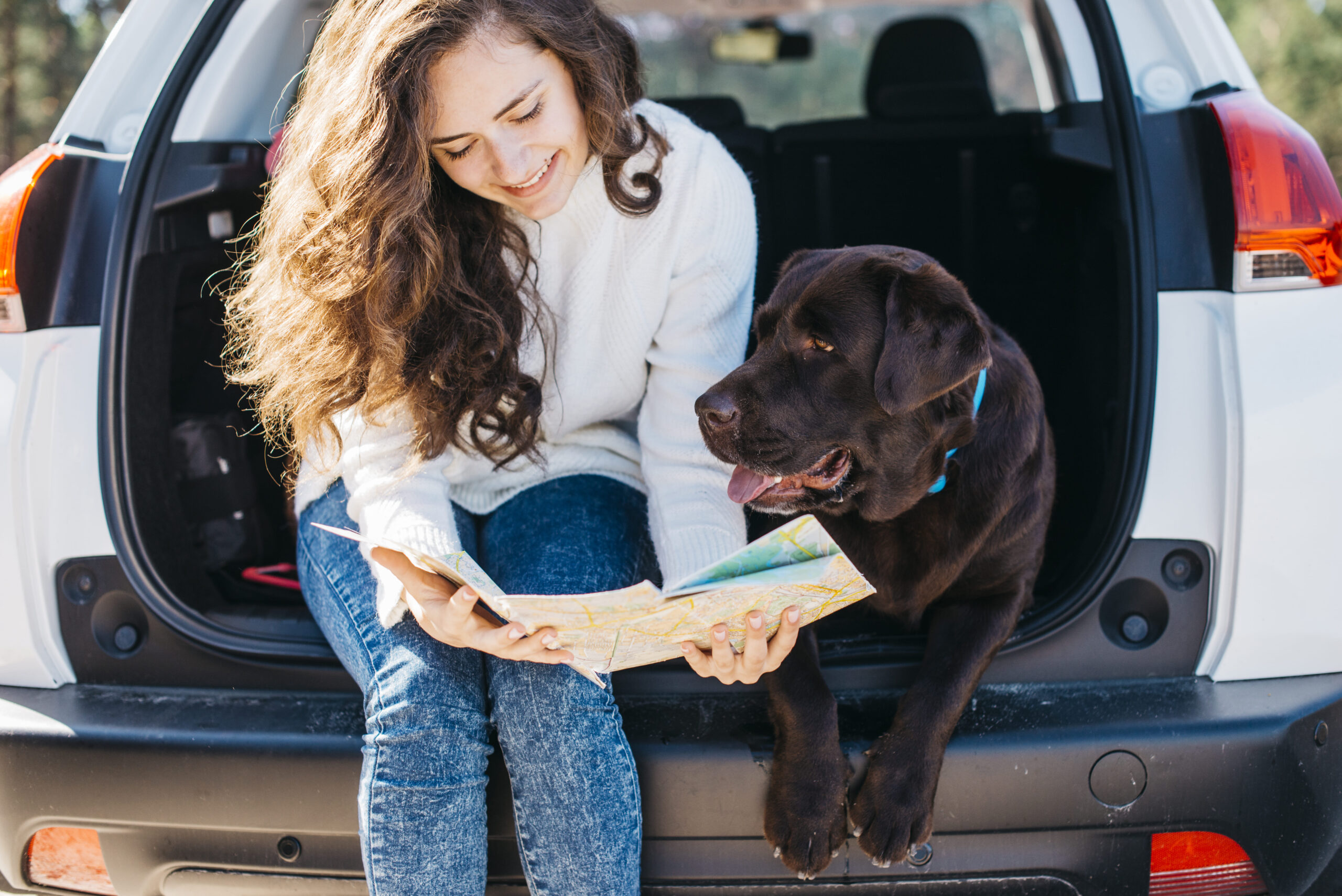
Whether you’re planning a road trip, catching a flight, or arranging care while you’re away, traveling with pets requires a little extra preparation. With the right planning, you can help ensure your pet stays comfortable, safe, and as stress-free as possible throughout the experience.
Traveling by Car
Road trips can be a great way to include your pet in your adventures, but long car rides can be challenging especially for cats.
Tips for Traveling with Cats
Unlike dogs, cats generally cannot be walked during rest stops, so planning ahead is important. For long car rides, we often recommend using a large dog crate that provides enough room for:
- A comfortable bed
- Food and water dishes
- A litter box
Many cats also appreciate having a smaller carrier or box inside the crate where they can hide if they become anxious during the trip.
Tips for Traveling with Dogs
A crate can be beneficial for many dogs as well. Some dogs feel more secure in an enclosed space, particularly if they are already crate-trained. Crates can help reduce anxiety and keep pets safe while traveling.
Bringing your pet’s favorite chew toys, treats, or enrichment items can also help keep them occupied and reduce stress during the journey.
Take Frequent Breaks
Be sure to stop regularly so your dog can:
- Stretch their legs
- Take a walk
- Relieve themselves
- Get some fresh air
Frequent breaks can make long drives more comfortable for both pets and owners.
Never leave a pet alone in a car unsupervised. Regardless of the temperature outside, temperatures inside the car can be 40 degrees hotter inside than outside.
Practice Before the Trip
Preparation can make a huge difference. Before a long journey, try taking shorter car rides together so your pet becomes accustomed to traveling. If you plan to use a crate or carrier, create positive associations by:
- Feeding meals in the crate
- Offering treats and rewards
- Providing praise and positive words
- Spending time near the crate during relaxing activities
These positive experiences can help your pet feel more comfortable when travel day arrives.
Traveling by Air
Air travel requirements vary significantly between airlines, so your first step should always be contacting your airline directly to learn their specific policies and requirements.
Cabin vs. Cargo Travel
Some smaller dogs and cats may be allowed to travel in a carrier under your seat in the cabin. Larger dogs typically must travel in an approved crate within the cargo area of the aircraft.
Prepare Your Pet for Their Carrier
Just as with car travel, pre-conditioning can help reduce stress. Before the flight:
- Allow your pet to spend time in their travel carrier
- Feed meals in the carrier
- Reward calm behavior
- Offer praise and positive reinforcement
Helping your pet view the carrier as a safe space can make travel much easier.
Medical Records and Health Certificates
Many airlines require pets to have:
- Current vaccinations
- Up-to-date parasite prevention
- Documentation of medical history
Your veterinary team can help provide the necessary records.
Some airlines also require a recent veterinary examination and a health certificate prior to travel. Be sure to verify requirements well in advance of your departure date.
Some airlines do not allow brachycephalic pets (‘squished nosed’ pets) to travel due to the increased risk to their health and safety.
Bring a copy of your pet’s paperwork as well as extra medications they take in case of lost luggage.
To minimize stress, try to take a nonstop flight when possible.
International Pet Travel
International travel with pets is considerably more complex than domestic travel and often requires significant advance planning.
Getting Started
Visit the USDA APHIS website and start under the “Traveler’s” section to review the specific requirements for your destination. Requirements vary widely between countries and are updated frequently. Because of this, pet owners are responsible for ensuring they understand and meet all destination-specific requirements.
We highly recommend working with a professional pet transportation service to help navigate the process.
Important Considerations
Many countries require:
- A USDA-accredited veterinarian to complete travel paperwork
- Current rabies vaccinations
- Microchip verification or placement at the time of vaccination
- Additional laboratory testing
Some destinations require a Rabies FAVN test, which can take up to a month or longer for results. Because of these timelines, planning should begin as early as possible.
Additionally, many countries require travel certificates to be completed within 10 days of departure, meaning multiple veterinary appointments may be necessary.
Information We May Need
To prepare international travel documents, we will likely need:
- Exact travel dates
- Destination country
- Flight information
- Recent medical history
- Previous veterinary records
- Microchip records
Please gather any records from previous veterinary clinics and send them to us if needed.
If you have questions about international pet travel requirements, please call Village Animal Hospital at (770) 393-8936.
Medications Can Help
Whether your pet is traveling by car or plane, domestically or internationally, travel can be stressful.
Many pets benefit from anti-anxiety medications to help them remain calmer and more comfortable during travel. Additionally, anti-nausea medications may help pets who experience motion sickness during car rides or flights.
Every pet is different, so we encourage you to contact your veterinarian to discuss the safest and most effective options for your pet before travel.
Pet Boarding and Pet Sitting
If your pet won’t be traveling with you, you’ll need to decide between pet sitting and boarding.
Pet Sitting
Pet sitting can be an excellent option because pets are able to remain in the environment they know best: their own home. This is often especially beneficial for cats, who tend to be more comfortable in familiar surroundings.
Pet Boarding
Pet boarding is another excellent choice for many pets and provides:
- Comfortable, clean accommodations for dogs and cats
- Personalized attention from trained staff
- Regular updates for pet owners
- Veterinary care if medical needs arise during the stay
Most importantly, boarding offers peace of mind, knowing your pet is safe, happy, and well cared for while you’re away.
Planning Ahead Makes All the Difference
Whether you’re heading across town or across the world, a little preparation can go a long way toward making travel safer and less stressful for your pet. By planning ahead, practicing travel routines, ensuring all medical requirements are met, and considering anxiety management when appropriate, you can help your furry family member enjoy a smoother experience wherever life takes you.